Quality
QC photos and what the inspection skips
The check is an appearance check on arrival, and the page describing it is unusually direct about its own exclusions. Those exclusions are the part worth reading.
Scope
The six things recorded on arrival
When your item reaches the warehouse, someone looks at it and photographs it. The photographs are free and there is no stated limit on how many you can ask for, which is genuinely useful and not universal in this market.
Six things get assessed, and the official wording lists them plainly.
| Recorded on arrival |
|---|
| color |
| visible damage |
| stains |
| size |
| model |
| version number |
- CNThe scope, in the official wording
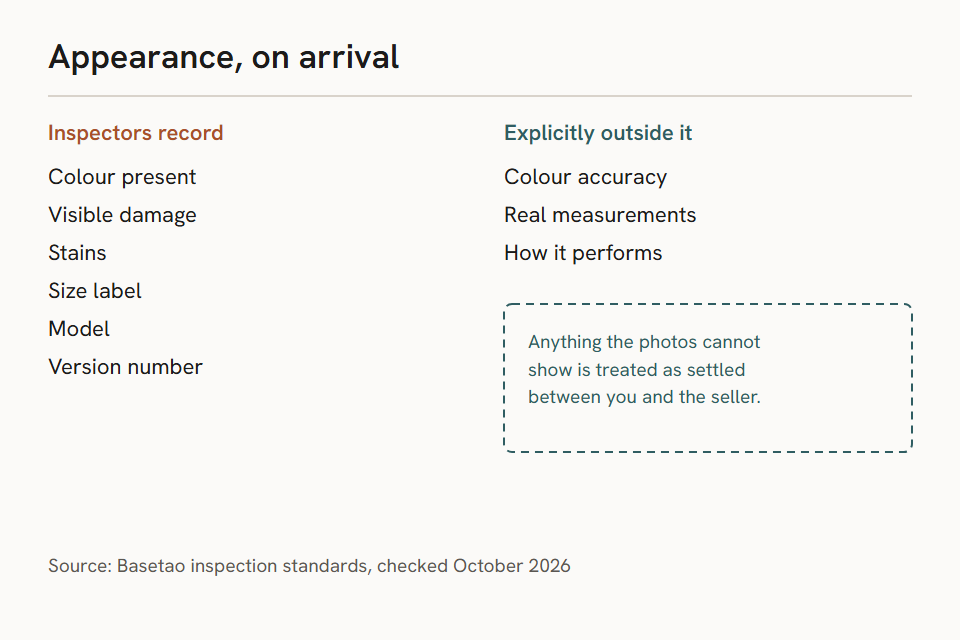
Professional quality inspectors will assess the color, visible damage, stains, size, model, and version number. However, differences in color and actual size are not included in the inspection scope.
Inspection standards, checked October 2026
Note what kind of list that is. Every item on it can be established by looking: a colour is present, a seam is torn, a label says L, a box says v2. Nothing on it requires using the product.
Exclusions
The three exclusions, and the clause behind them
The same page then names three things the inspection does not cover: colour accuracy, real measurements, and how the product performs in use. That is an unusually honest paragraph for a commercial policy, and it has consequences that are easy to miss.
Colour is recorded but not judged. An inspector notes the item is blue. Whether it is the blue in the listing photograph is explicitly not their call, and photographs taken under warehouse lighting will not settle it for you either.
Measurements are not taken. The size label is read; the garment is not measured. If a seller's medium runs small, that is not a defect the inspection will find.
And then there is the clause that decides what happens to everything in the gap:
- CNWhat happens to anything unverifiable
If certain information cannot be verified - such as the absence of visible damage or stains - it will be assumed that you have reached an agreement with the seller.
Inspection standards, checked October 2026
Read that twice. Whatever the check cannot establish is treated as already settled between you and the seller. Not open, not pending, not escalated: settled. Silence counts as agreement, which means a question you did not resolve before ordering has quietly been resolved against you.
This is the single clause that most changes how you should behave, and it is why this guide keeps pushing decisions earlier: the inspection is not a safety net for doubts, it is a record of appearances.
Practical
Reading the QC photos without missing anything
Arrival photographs are usually uploaded the day the item lands, and they are the only look you get before committing to shipping costs. A short routine gets far more out of them than scrolling.
Check the order, not the item
Open your own order next to the photos and compare field by field: size on the label, colourway name, version or model number. The inspection records exactly these, so a mismatch here is actionable in a way that it looks wrong
is not.
Read printed text letter by letter
Names, numbers, logos and care labels are where errors are both common and visible. A jersey with the right number and a misspelled name is a defect the photographs can prove.
Ask for the angles the photos skip
Soles, inner labels, hardware, stitching at stress points. The photos are free and unlimited, so a specific request costs nothing and gets you evidence rather than reassurance.
Decide before the clock runs
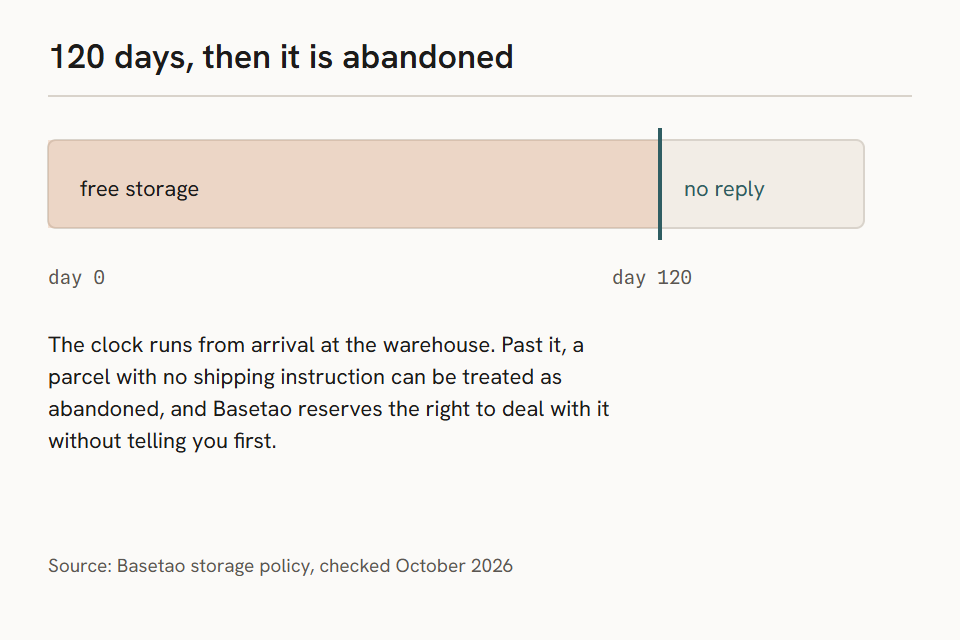
The seller's return window starts when the parcel reaches the warehouse, not when you look at the photos. Storage is free for 120 days, so there is no pressure to ship, but there is pressure to decide about returning.
One category
Why electronics are the hardest case here
Electronics get their own paragraph on the inspection page, and it is the strictest thing on it.
- CNElectronics are checked from the outside only
For electronic and digital products, the inspection is limited to external appearance only. It does not include checking the completeness of accessories or powering on the device. [...] Therefore, any functional issues are not covered under the insurance policy.
Inspection standards, checked October 2026
So: no accessory count, no power-on test, and functional problems explicitly outside insurance. A phone charger that arrives intact and does not work is not a case the system is built to handle, and the photographs will show an intact charger.
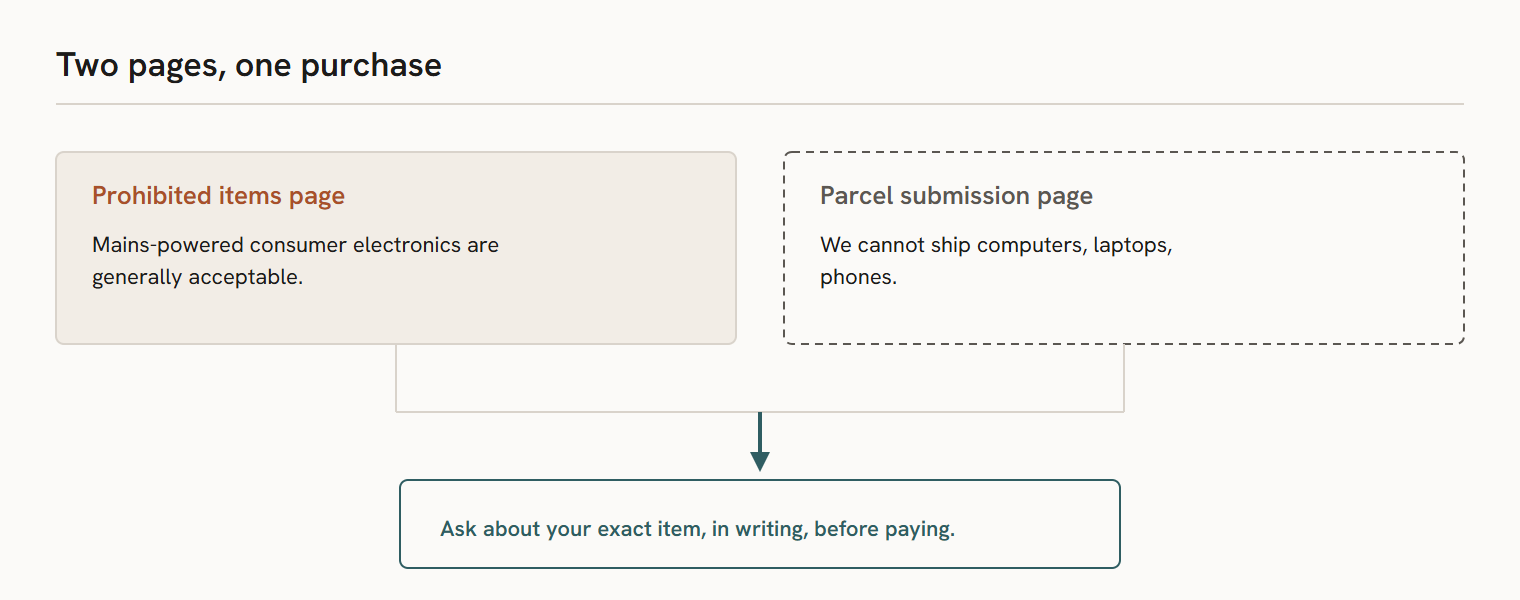
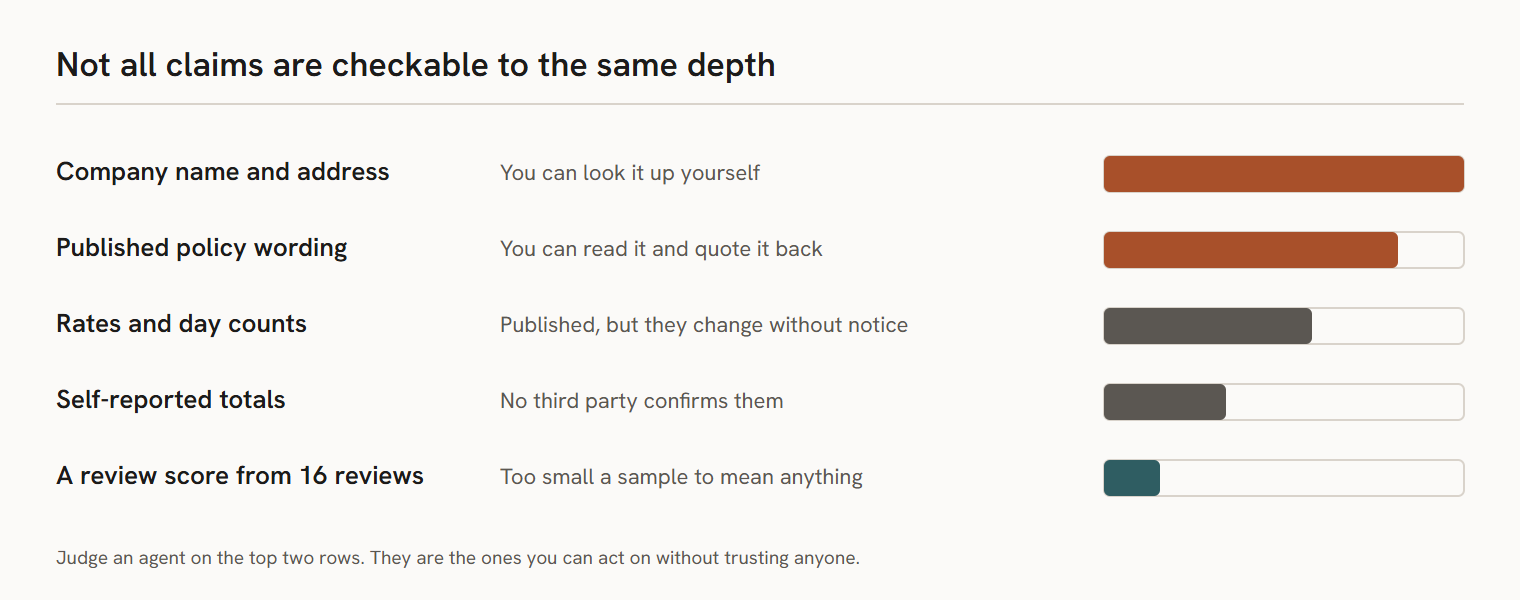
This compounds with the other electronics problem on this site. The two official pages disagree about whether consumer electronics can be forwarded at all: one treats mains-powered devices as generally acceptable without lithium batteries, the other refuses computers, laptops and phones outright. So an electronics order can fail twice, once on shipping and once on what the check covers.
If you are buying anything powered, settle both questions in writing before paying, and price in the possibility that the answer is no.