Spreadsheet
Browsing finds by category
Sixteen entries into a catalogue of listings, plus the honest limits of what a catalogue can tell you before an agent has the item in hand.
All sixteen
The sixteen category entries
Each entry opens a catalogue of listings in that category. Picking from a category is the easy half. The notes on each card are about the half that follows: how that kind of item behaves in a warehouse, in a photograph, and in a box.
 SneakersBoxed and light. The size label is one of the six things inspectors write down, so a mislabelled pair is catchable.Category
 HoodiesBulky for their weight, which is where the divide-by-5000 rule starts costing you.Category
 BagsHardware and stitching show up in arrival photos. Interior smell and lining quality do not.Category
 EyewearSmall, fragile, cheap to post. Breakage is covered by insurance; a scratch you have to argue about is not.Category
 JeansHeavy and dense, so they travel on real weight rather than volume. Measurements are outside inspection scope.Category
 T-shirtsThe cheapest thing to add to a parcel you are already sending, and the easiest to get wrong on sizing.Category
 HatsCrushable. Worth asking for reinforced packing rather than discovering the brim bent in transit.Category
 PerfumeA liquid, and the forwarding page refuses liquids outright. Settle this one before you order, not after.Category
 WomenswearRuns a search rather than opening a category: the catalogue sorts by garment, not by who wears it.Search results
 BeltsLength is the thing photos will not settle for you, and real measurements are excluded from the check.Category
 JerseysPrinted names and numbers are exactly the detail worth checking in the arrival photo, letter by letter.Category
 WatchesAlmost always a battery question. Sealed inside is one rule, shipped loose is a refusal.Category
 SweatpantsLight, compressible, and a sensible filler when you are paying for volume you have already committed to.Category
 Jackets and coatsThe usual reason a parcel costs more than expected. Down fills space without adding weight.Category
 JewelleryTiny and high value. Declared value drives both the insurance premium and what customs takes an interest in.Category
 ElectronicsWhere the two official lists contradict each other. Read both pages before you order anything powered.Category
Womenswear behaves differently from the rest. The catalogue sorts by garment rather than by who wears it, so there is no womenswear category to open and that card runs a search instead. The card says so, and the badge on it is different from the others.
All sixteen destinations were verified in September 2026 and re-checked in October. Listings change daily; the categories themselves are stable.
Definitions
What a spreadsheet is in this context
The word gets misread constantly, so: this is not a file. There is nothing to download, no cells, no tabs along the bottom. A spreadsheet in this context is a browsable catalogue of product listings, grouped into categories, maintained so that newcomers do not have to work out which of forty near-identical listings is the one people actually mean. You scroll it the way you scroll a shop.
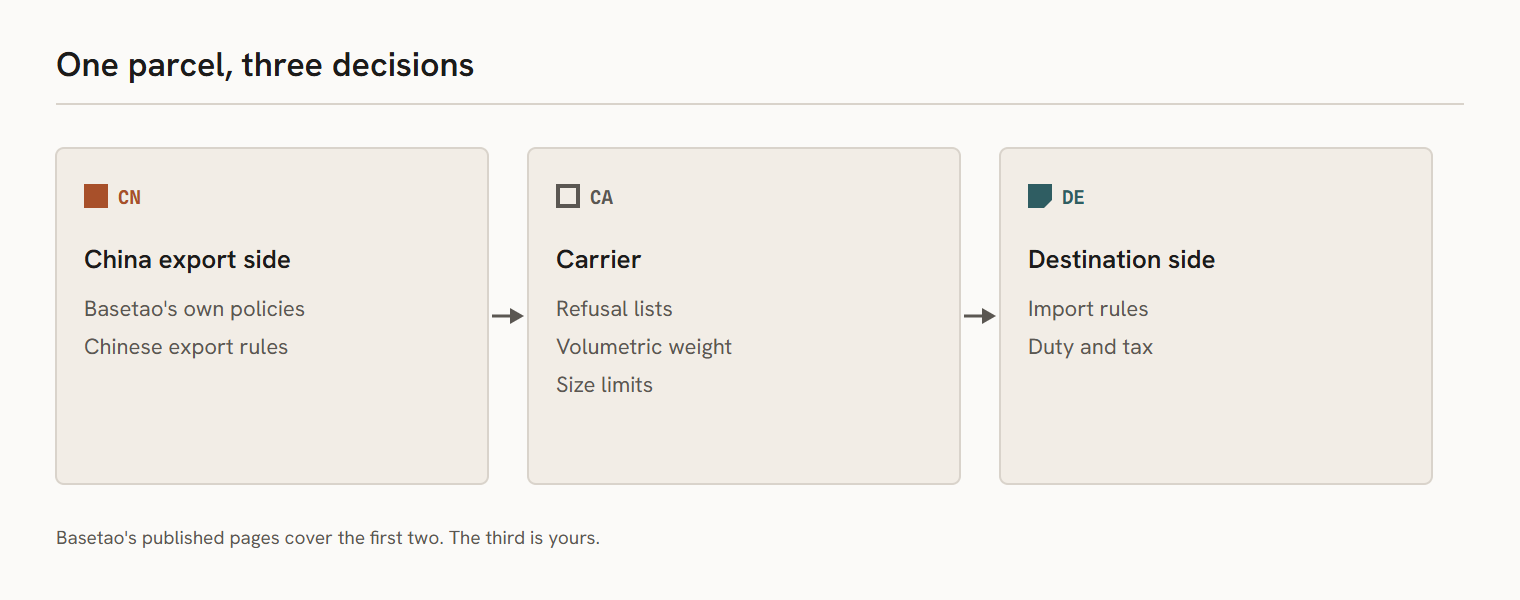
What it gives you is a shortlist and a link. What it cannot give you is anything about the physical item: whether this particular seller ships quickly, whether the colour matches the photograph, whether the thing can legally leave China in the first place. Those are decided later and by other parties, which is what the rest of this guide is about.
Read it as a starting point and you will do well. Read it as a guarantee and you will be annoyed at the wrong people.
Tools
The tools worth using before you order
Search by name, then narrow by category
Typing a product name into the box at the top of any page on this site runs a search across the catalogue. It is the fastest route when you already know what the thing is called. Categories are better when you do not, or when you want to see the range before committing to a search term.
Search by image when you only have a photo
Most finds circulate as screenshots with no text attached. An image search takes that screenshot and returns listings that match it, which is usually faster than guessing the Chinese name of a specific colourway.
Price and weight before you commit
Two numbers are worth checking before you order rather than after: what a line costs for your declared value and weight, and what the volumetric figure does to that. Basetao publishes a calculator for this and it does not require an account.
The check on this site
The one tool here that you will not find elsewhere sorts a single purchase into the three parties who can stop it, and tells you which official clause each obstacle comes from.
Quality
How to judge a spreadsheet site, including this one
Catalogue sites and guides like this one are easy to make and easy to abandon, and an abandoned one is actively harmful: it sends you to listings that no longer exist and quotes policies that have changed. Three checks separate the maintained ones from the rest, and all three take about a minute.
Click two outbound links
Not the internal navigation, the links that leave the site. If they land on a 404 or a redirect chain, nobody has read that page in months. This is the single most reliable test there is.
Look for a date next to a number
Any site quoting a fee, a percentage or a day count without saying when it checked is quoting from memory. Rates change without notice and the number alone is worthless.
See whether it says what it does not know
A guide that answers everything confidently has stopped distinguishing between what it verified and what it assumed. The useful ones are specific about their own gaps.
The same three checks, applied here
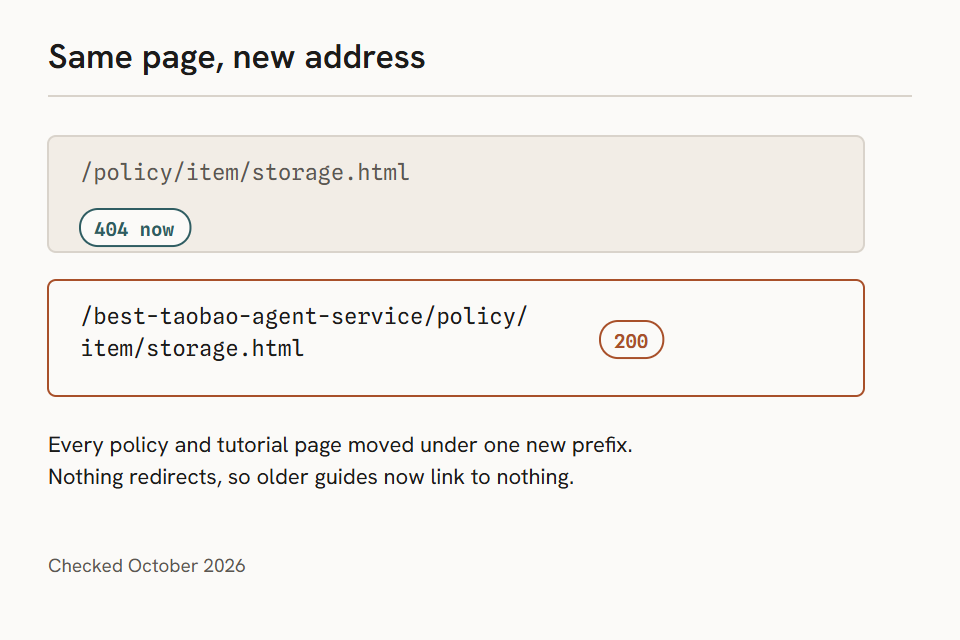
Basetao moved every policy page under a new address prefix in 2026 and set up no redirects, which broke every link written before that. We found this by clicking, re-harvested all eighteen pages from the live navigation, and logged the change with its date. Every figure on this site carries the month it was checked. Where Basetao's own pages contradict each other, both versions are quoted rather than resolved, and where something is unpublished it says so.
That is the standard being claimed here, and it is checkable. Click an outbound link.